How Big Can a Granny Flat Be in Perth?
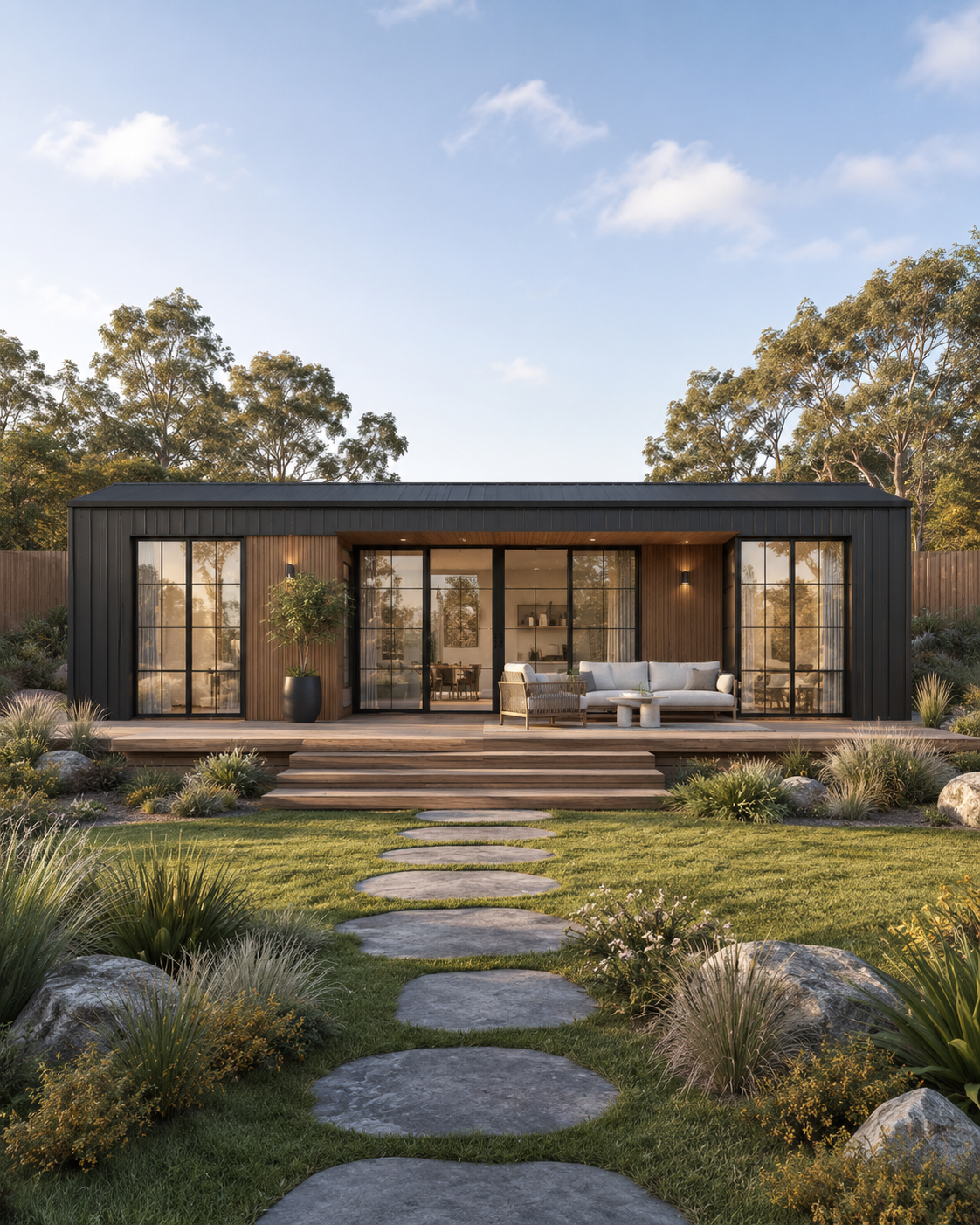
Most people ask the wrong question first.
They ask:
“How big can I build a granny flat?”
The better question is:
“How big should it be to make sense?”
If you are building a granny flat in Perth, the maximum size is generally 70 m² under the planning rules.
But that number alone does not tell the whole story.
As designers working with the Western Australian R-Codes, we see many homeowners waste space, money, and development potential simply because they chase the maximum size without understanding the planning framework.
Let’s break it down properly.
The Planning Rule: 70 m² Maximum
Under the Residential Design Codes (R-Codes) in Western Australia, a granny flat (officially called a Secondary Dwelling) is limited to:
Maximum floor area:
70 m² (some local authorities allow up to 100m² with condition)
Important notes:
• The 70 m² refers to internal living space
• Outdoor areas like alfresco, patio, or carport may be additional
• The granny flat must be on the same lot as the primary dwelling
This rule applies across most councils in Perth.
What 70 m² Actually Looks Like
70 m² is larger than many people expect.
A well-designed granny flat can comfortably fit:
• 2 bedrooms
• 1 bathroom
• Open kitchen / living
• Laundry
• Built-in storage
A typical efficient layout might look like this:
SpaceTypical SizeLiving / Kitchen22–25 m²Bedroom 110–12 m²Bedroom 28–10 m²Bathroom4–5 m²Laundry2–3 m²Circulation / Storage6–8 m²
Total: ~65–70 m²
With good planning, this size feels like a small house, not a tiny unit.
Can You Build Bigger Than 70 m²?
Generally, no.
If you go larger, the building will usually be classified as a separate dwelling, which triggers:
• Subdivision requirements
• Separate services
• Different planning approvals
• Much higher costs
This is why most projects stay within the 70 m² secondary dwelling limit.
However, you can still create a larger feeling space by adding:
• Alfresco area
• Patio roof
• Outdoor living space
• Storage shed
• Carport
These can significantly increase usability without breaking the planning rules.
Smart Granny Flats Are Often Smaller
Here is something most people don’t realise.
The best granny flats are often around 55–65 m².
Why?
Because smaller designs:
• Cost less to build
• Fit easier on most Perth blocks
• Leave more backyard space
• Often achieve better rental yield
Many investors actually prefer compact 1-bedroom or efficient 2-bedroom designs rather than pushing to the full 70 m².
Design efficiency matters far more than raw size.
Site Conditions Still Matter
Even if the maximum is 70 m², your site still needs to comply with:
• Boundary setbacks
• Open space requirements
• Access and parking
• Services connection
• Sewer location
• Local council planning policies
This is why a site assessment and feasibility review is always the first step before designing.
Every block is different.
Thinking About Building a Granny Flat?
A well-designed granny flat can:
• Generate rental income
• Increase property value
• Provide housing for family
• Unlock development potential on your block
But the difference between a good project and a costly mistake often comes down to getting the planning and design right from the beginning.
At TBARCH, we help homeowners across Perth design compliant, efficient secondary dwellings that maximise both livability and value.
If you are considering a granny flat on your property, start with the right advice.
A quick feasibility review can save thousands before any design work even begins.